
Criminal Cases in the Whiteside County Courts
The Circuit Court of the Fourteenth Judicial Circuit hears Whiteside County felony and misdemeanor cases. The Circuit Clerk keeps the filed complaint or information, motions, orders, docket entries, judgment, and sentence. Neither the Sheriff nor the State's Attorney is the custodian of that judicial file. The prosecutor decides what charges to bring, while the clerk records what was filed and what the judge did.
Criminal business may be heard at the Main Courthouse, 200 E. Knox Street in Morrison, or the Eastern Branch, 101 E. Third Street in Sterling. Call the Morrison criminal counter at 815-772-5188 or Sterling at 815-535-4530 before traveling for an archived case or certified disposition. City ordinance, traffic, misdemeanor, and felony matters all route through the county court system after filing. There is no separate Sterling, Rock Falls, or Morrison criminal trial docket.
Whiteside Courtroom Codes by Location
A small detail on the Whiteside County Judici search prevents a common trip to the wrong city. Numeric Daily Docket locations identify Sterling courtrooms. Lettered locations identify Morrison courtrooms. The docket location controls, even when the arrest occurred closer to the other courthouse.
The two counters serve one Circuit Clerk system, but a scheduled hearing remains tied to its listed room. Confirm the location and time on the current docket. For remote sessions, the county courts office warns that people physically present receive priority, so a remote participant may wait.
Note: A Sterling arrest can produce a Morrison hearing, and a Morrison resident can have a Sterling docket location.
How to Search Case Records
Start with Judici for a public Whiteside County criminal case search. An exact case number is best. A party-name search works when the number is unknown, but common names demand a close check of case type and filing date. Re:SearchIL provides account-based access to statewide e-filed documents. It complements Judici rather than replacing the clerk's official file.
- Open Whiteside County in Judici and choose a case-number or party-name search.
- Enter the full case number when known. Otherwise, use surname and first name.
- Compare the case type and filing year so a similar name does not lead to the wrong file.
- Open the docket. Read every count and the final order date, not only the first charge.
- Ask the relevant Circuit Clerk counter for a plain or certified copy when an image is absent.
| Field Label | Type | Required | Notes |
|---|---|---|---|
| Court | Select | Yes | Choose Whiteside County. |
| Case number | Text | Alternate | Most precise route when known. |
| Last and first name | Text | Alternate | Use spelling from the filed case. |
| Case type or year | Filter | No | Narrows similar names and unrelated matters. |
| Daily Docket | Link | No | Numbers mean Sterling; letters mean Morrison. |
Whiteside Case Search Portal Differences
Judici's participating-court search is the practical first stop for Whiteside docket entries, case status, and daily calls. Re:SearchIL is the statewide, account-based layer for e-filed court documents. Coverage and document access can differ. A missing image in either service does not mean the document never existed.
The Illinois e-filing program explains the statewide filing system behind current electronic records. Older Whiteside County criminal cases may require a clerk search by name, approximate year, and charge. For a document that must prove an outcome, request the judgment or certified disposition directly rather than relying on a screen capture.
The Illinois circuit-clerk directory identifies the official county clerk channel. The portal displays data; the clerk certifies the record.
What the Case File Shows
A Whiteside County criminal case file separates the accusation from the result. Searchers should match the case number across the charging document, docket, final order, and sentence. Each count deserves its own reading because one count may end in conviction while another is dismissed. Later entries may also appear after a case is marked closed, including payment activity or post-judgment orders.
| Case Number & Court | Identifies the Whiteside case, filing year, case type, and assigned court location. |
|---|---|
| Charging Document | States each allegation formally filed by the prosecutor. |
| Docket Entries | Chronological record of filings, appearances, motions, and court orders. |
| Hearing Dates | Past events and scheduled calls, subject to later court changes. |
| Disposition & Judgment | Shows how each count ended, including dismissal, acquittal, supervision, plea, or verdict. |
| Sentence & Conditions | Records custody, probation, fines, restitution, or other terms ordered by the court. |
Read Every Whiteside County Case Count
The first charge is not the final result. Illinois court language can also be easy to misread, especially when several counts have different outcomes. Use the final order and disposition date for each count.
- Nolle prosequi
- The prosecutor declined to continue that count. It is not a conviction.
- Dismissed
- The court ended the count without a finding of guilt.
- Not guilty
- An acquittal after the court or jury resolved the charge.
- Court supervision
- An Illinois nonconviction outcome when completed successfully.
- Guilty
- A finding that may follow a plea or trial verdict.
- Revoked
- A prior conditional outcome changed after a later court finding.
A closed case can still gain entries for collections, amended orders, or later proceedings. When the distinction matters, obtain the signed order from the Whiteside County Circuit Clerk.
Stages of a Criminal Case
A Whiteside prosecution begins in the court file when charges are filed. Felony procedure may involve a complaint followed by an information after a preliminary-hearing waiver or finding, or by a grand-jury indictment. Arraignment tells the accused the charge and takes a plea. Discovery and motions follow. The case then ends by dismissal, negotiated plea, trial judgment, or another lawful disposition, with sentencing when there is a conviction.
Case flow: Charges Filed › Arraignment › Pretrial › Plea or Trial › Disposition › Sentencing
Current Illinois files use release conditions and detention decisions under pretrial reform. Older Whiteside County dockets can still show cash-bond types and amounts. Preserve the language used at the time rather than translating an old entry into a current term.
Get a Certified Whiteside Case Disposition
When a portal record is incomplete, identify the exact document before contacting the clerk. A docket sheet gives the event history. A judgment or sentencing order proves the court's final action. Certification adds the clerk's official authentication. The Main Courthouse counter at 200 E. Knox Street, Morrison, handles criminal files, copies, certification, and fines.
Whiteside County Circuit Clerk
200 E. Knox Street
Morrison, IL 61270
815-772-5188
General office: 815-772-5164
Eastern Branch Court
101 E. Third Street
Sterling, IL 61081
815-535-4530
Call first for the correct file location.
Supply the case number and request the specific information, indictment, judgment, sentencing order, or docket sheet. For an old unindexed matter, give the name, approximate year, and charge. Current copy and search fees were not confirmed in the official material, so ask the clerk before ordering.
Official Court Access in Whiteside County
The Illinois Courts clerk directory shows how county clerks anchor the official record system.
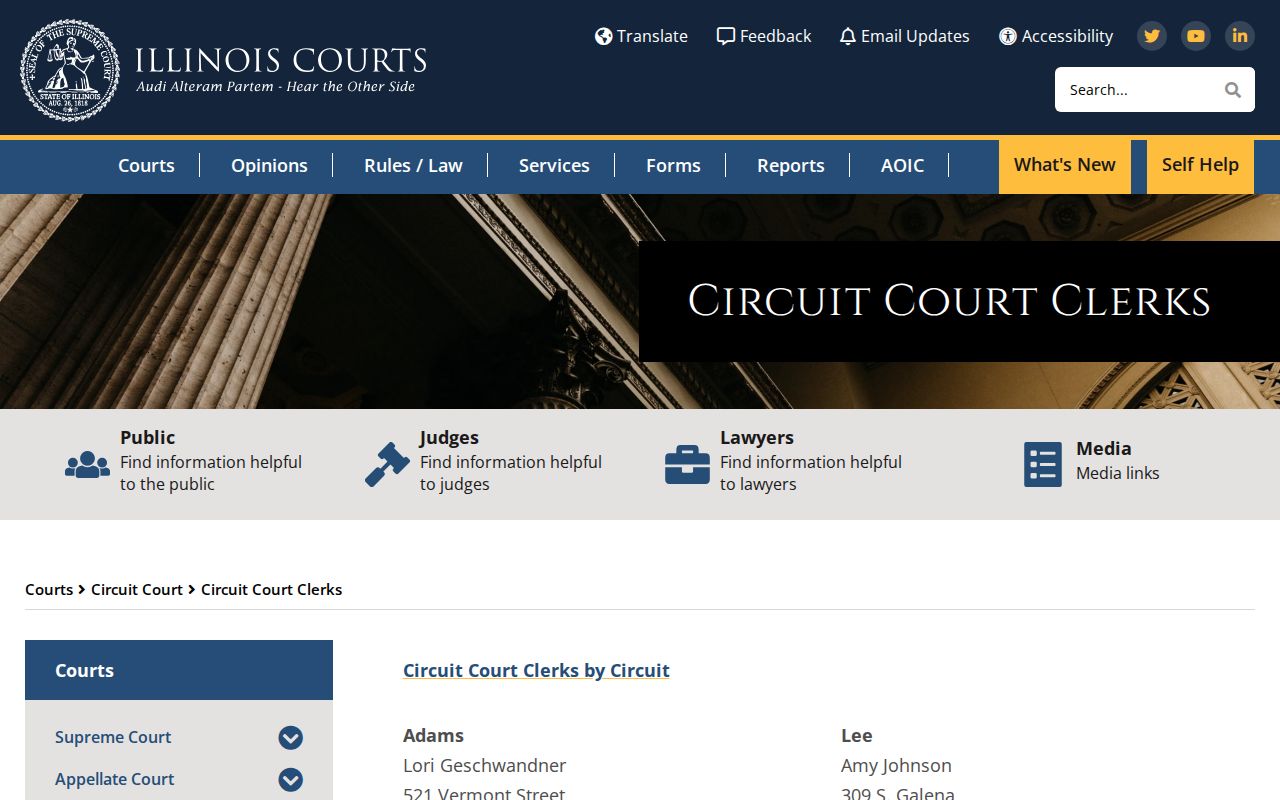
That statewide directory supports using the Circuit Clerk, not another county office, for certified case material.
The local Whiteside Judici interface provides the county-specific online starting point.
Its county selection and case fields help narrow the correct Whiteside docket before a copy request.
The broader Judici case-search landing page identifies participating Illinois courts.
The participating-court layer is useful when a name may have cases outside Whiteside County.
Re:SearchIL supplies the distinct statewide e-filed-document channel.
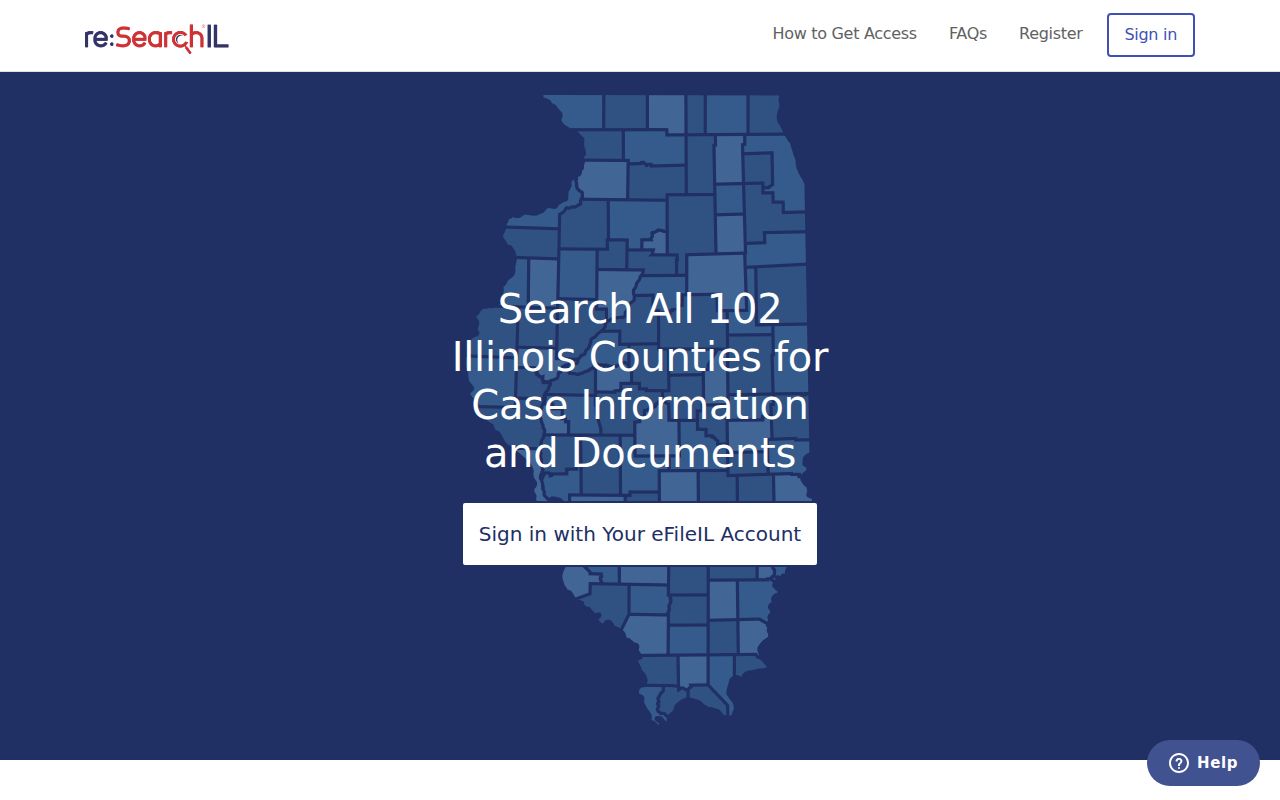
It can add filed-document access, while the Whiteside Circuit Clerk remains the source for certification.
Finally, the Illinois eFileIL information page explains the electronic filing framework.
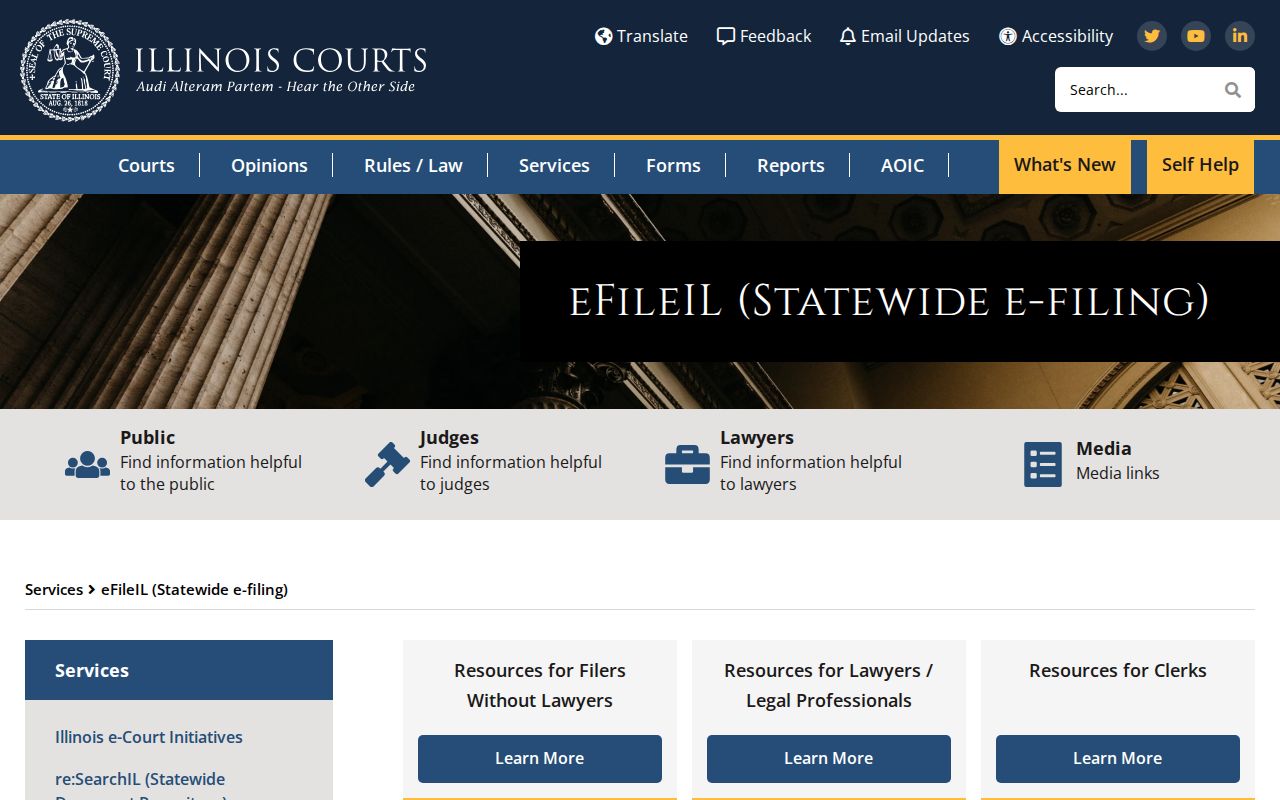
This statewide context helps explain why recent filings may appear online while an older paper file requires clerk help.
Access and Restrictions
Illinois court access is governed by court policy, statutes, rules, sealing orders, and clerk practice. Ordinary executive-agency FOIA does not by itself define access to every judicial file. Public views may omit juvenile matters, sealed or expunged records, victim and minor identifiers, account numbers, medical data, and material protected by a court order.
A blank Judici result can mean a spelling mismatch, an old file, a delayed entry, or a lawful restriction. Ask the Whiteside County Circuit Clerk whether a public record exists and how to request it. The clerk may provide a redacted public copy even when protected data cannot be released. An online record should never be used as proof that no case exists.
Court records and police records follow different access routes. A filed complaint, docket entry, judgment, or sentencing order belongs in the judicial file. The officer's narrative, dispatch material, and evidence records remain with the agency that created them and may be requested through that public body's FOIA process. State conviction information is yet another product held by ISP. Naming the exact document and custodian helps Whiteside County staff determine whether a record is public, sealed, archived, or held elsewhere. It also avoids treating a public index as if it were the complete certified court file.
Access rule: Court records follow the Illinois Supreme Court access policy and sealing law. Executive records requests follow the Illinois Freedom of Information Act.
For broader county record context, the Whiteside County criminal history overview distinguishes court files from sheriff, ISP, and correctional records.